



 All Post
Google launches "Preferred Sources" worldwide: what changes for SEO and Publishers
Apr 30, 2026 | Author: Anna Battistella
Today, April 30th, Google announced the update that will change how users consume news: the Preferred Sources feature.
Finally available globally, the Google Preferred Sources update gives users control over the news displayed in their search results. But what does this mean for you as a website owner, blogger, or news publisher?
Let's discover how the new Google News and Search update works, and the best SEO strategies to take advantage of it.
What is Google's "Preferred Sources" Feature?
Until today, Google's Top Stories section was governed by non-personalized algorithms, rewarding factors like relevance, importance, and publisher authority.
With today's launch of Preferred Sources, Google introduces a powerful layer of personalization. Users can now select the publications and websites they want to appear more frequently in their search results.
Once sources are selected, articles from these publishers will appear in two highly prominent positions:
- 1. Within the classic Top Stories section.
- 2. In a brand-new dedicated section called "From your sources".
How Does It Work for Users?
The process designed by Google is extremely intuitive to encourage audience adoption:
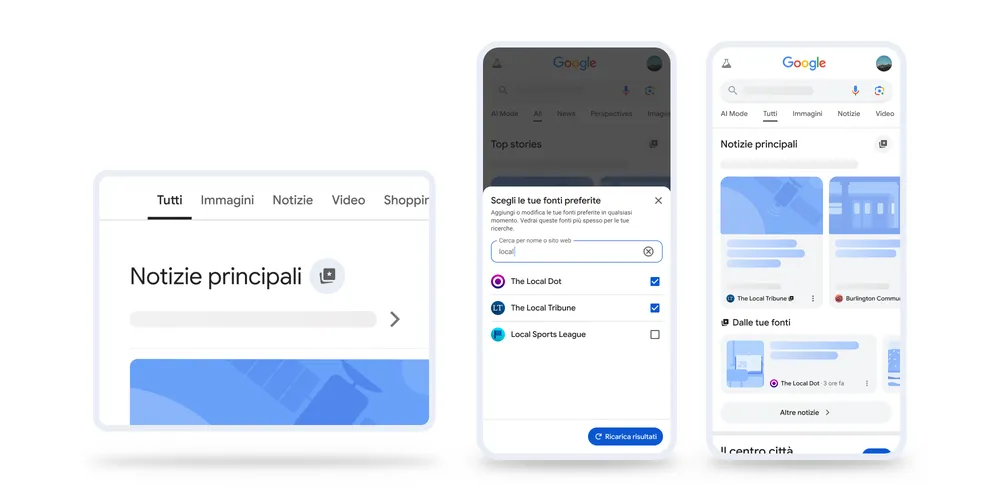
- 1. When a user searches for a trending topic, they will find a star-shaped icon next to the Top Stories section.
- 2. By clicking the star, they can choose their favorite websites and add them to their list.
- 3. By refreshing the results, the search engine will immediately prioritize content from the "starred" sites.
There is no limit to the number of preferences: according to data collected in Google Labs tests, over half of the users selected four or more sources, including global newsrooms but also local and niche blogs (over 200,000 unique sites have already been saved!).
3 Strategies to Leverage Preferred Sources
As publishers and website owners, the goal shifts starting today: ranking is no longer enough; you need to be chosen. Here's how you can take action:
1. How to create an “Add to Preferred Sources” Link for your site
Want to make it even easier for your audience? You don't have to wait for them to stumble upon the star icon in the search results. That’s the direct link that automatically prompts users to add your website to their Preferred Sources.
You can use this exact URL structure: https://www.google.com/preferences/source?q=YOURWEBSITEURL.tld (Simply replace it with your actual domain)
2. Actively invite your readers to save you
Google itself advises publishers to encourage readers to add their website to their Preferred Sources list. You can do this by inserting Call to Actions (CTAs) within your articles, at the bottom of your posts, or through non-intrusive pop-ups, explaining to users how to click the star on Google Search.
3. Focus on Brand Awareness
Since users will actively search for the names of publishers they know to add them to their sources, building a strong brand in your industry becomes vital. Be consistent in your niche and offer journalism or high-quality content.
Conclusion
The April 30th rollout of Preferred Sources marks a significant step towards a more user-centric web. For newsroom, corporate blogs, and publishers, it's an invitation to nurture your community and focus on retention.
The future of SEO on Google News is no longer dominated solely by backlinks and keywords, but by the genuine trust you manage to build with your readers.
Start asking your users to make you their "Preferred Source" today!
Recent Posts
-
Google Quality Raters: How to tell if they visited your site
Oct 12, 2026 | Author: Anna Battistella
-
HoneyLog now supports MCP: ask your AI assistant about your traffic
Sep 30, 2026 | Author: Anna Battistella
-
Google Discover Publisher Rankings in August 2026: winners, losers, and major shifts
Sep 17, 2026 | Author: Anna Battistella
-
Google Discover Publisher Rankings in July 2026: winners, losers, and major shifts
Aug 24, 2026 | Author: Anna Battistella
-
Google Discover Publisher Rankings in June 2026: winners, losers, and major shifts
Jul 21, 2026 | Author: Anna Battistella
Start monitoring your websites in few seconds No credit card required!
Start monitoring your websites in few seconds